
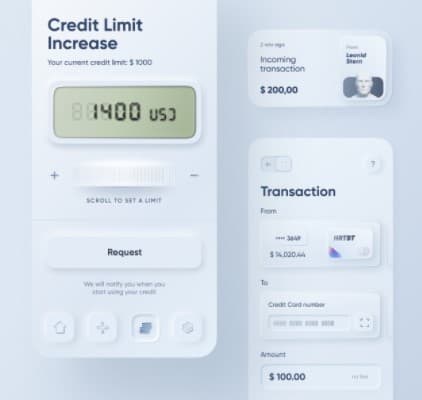
User interface design has evolved far beyond mere aesthetics. Modern UX requires a careful focus on:
- Accessibility -- ensuring all users can interact with your product
- Personalization -- tailoring experiences to individual needs
- Minimalism and simplicity -- reducing cognitive load
- Convenience -- making interactions effortless
Neumorphism emerged as a design trend around December 2019, blending elements from both contemporary and historical UI design approaches to create something uniquely compelling.
The Roots of Neumorphism
The evolution of UI design can be traced through three distinct phases:
Skeuomorphic Design
Approximately 40 years ago, Apple pioneered skeuomorphic design, emphasizing 3D realism through vibrant color palettes, hyper-realistic shapes, shadows, and surfaces. This approach made digital interfaces feel familiar by mimicking real-world objects.
Flat UI Design
In the late 2000s to early 2010s, Microsoft and Apple shifted toward minimalist design with monochromatic or contrasting palettes and a clean 2D aesthetic. This stripped away the visual complexity of skeuomorphism in favor of clarity and simplicity.
Neumorphism
UI expert Michal Malewicz introduced the concept of "New-Skeuomorphism," which was later termed "Neumorphism" by Jason Kelley. This hybrid style retained the visual softness of Flat UI and infused it with 3D-styled physical elements, creating a fresh and tactile digital experience.
Key Benefits of Neumorphism
Creation
Neumorphic design uses monochromatic palettes combined with inner and outer shadows to create raised, extruded element appearances. This gives interfaces a soft, almost tangible quality that invites interaction.
Experimentation
The style allows for selective color use on buttons and icons while maintaining a cohesive low-contrast aesthetic. Designers can highlight key interactive elements without breaking the overall visual harmony.
UI Implementation
Effective neumorphic design requires thoughtful use of contrasts, shadows, and interaction feedback to ensure accessibility. While the soft aesthetic is appealing, usability must remain the top priority.
Efficient Prototyping
Because neumorphism follows established design conventions, it enables rapid wireframing and prototype development. Teams can move quickly from concept to testable prototype.
User-Interface Bridge
Neumorphic elements create affordances that mimic real-world interactions. Beveled, pressed, or extruded element changes help users intuitively understand how to interact with the interface, bridging the gap between physical and digital experiences.
Why Mobile Optimization Matters
The importance of mobile-responsive design cannot be overstated. Every 2 out of 3 minutes the average user spends online is via a mobile platform, making mobile-first design critical for engagement and retention.
The Numbers Speak for Themselves
- 85% of users expect equal or better mobile UX compared to desktop
- Users are 5 times more likely to abandon tasks on sites lacking mobile optimization
- 88% of users abandon sites with accessibility or visibility issues
- 90% leave due to poor UI performance
- Every $1 invested in UX design yields approximately $100 in return
Conclusion
Neumorphic design can significantly enhance your app or site's marketability when executed carefully, with accessibility as the cornerstone. Major tech companies are already adopting soft UI approaches, suggesting competitive advantages for businesses that implement this methodology thoughtfully. The key is balancing aesthetic appeal with usability -- beautiful design means nothing if users cannot navigate it effectively.